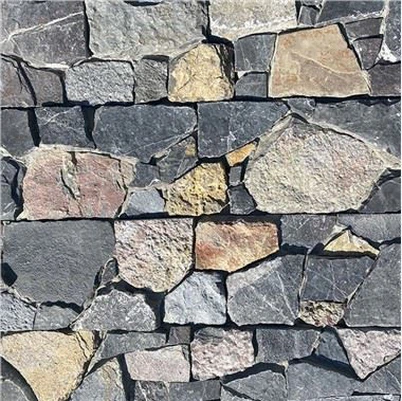
Quality discrimination of slate
Skildu eftir skilaboð
Inspection of flatness
Place a steel ruler with a straightness tolerance of 0.1mm on the two diagonals of the inspected surface, and measure the gap between the ruler surface and the plate surface with a feeler gauge or vernier caliper. The flatness of the sheet is represented by the measured value of the maximum gap. The measured value is accurate to 0.1mm.
Angle inspection
Measure with a 90-degree steel angle ruler with an internal angle perpendicularity tolerance of 0.13mm and an internal angle side length of 500mmx400mm. The short side of the square shall be close to the short side of the sheet, and the long side of the square shall be close to the long side of the sheet, and the maximum gap between the long side of the sheet and the long side of the square shall be measured with a feeler gauge or vernier. When the long side of the plate is less than or equal to 500mm, any opposite diagonal of the plate can be measured; When the long side of the plate is greater than 500mm, measure the four corners of the plate.
The measured value of the maximum gap represents the angular tolerance of the sheet. The measured value is accurate to 0.1mm.
Appearance quality inspection
1. The qualified plate and the inspected plate shall be placed flat on the ground and stand 1.5m away from the plate for visual inspection.
2. Manually chisel the plate flat on the ground and visually inspect it at 1.5m from the plate.
3. Number of color lines Measure the number of color lines.
4. Measure the length, width and height of the defect with vernier caliper for the missing corner and edge collapse; Visually check the number of missing corners.
5. Use a vernier caliper to measure the height of the step, and measure the maximum value as the height of the step.
6. The visible crack shall be determined by visual inspection, and the hidden crack shall be determined by hammering (that is, the metal hammer shall be used to knock the plate, and the crack shall be identified by sound, usually dumb sound).
7. Use a vernier caliper to measure the size of color spots, and visually measure the number of color spots.